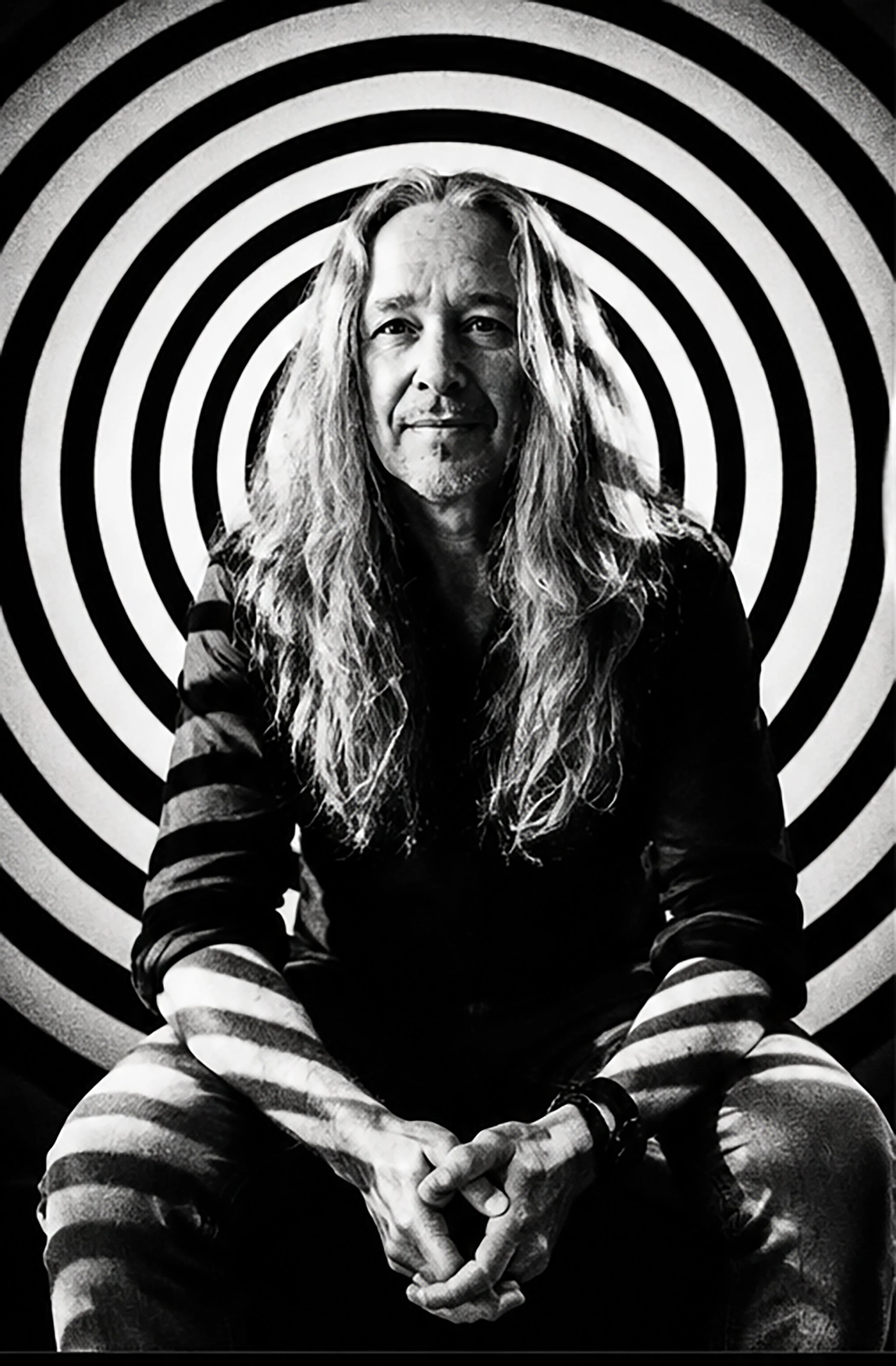
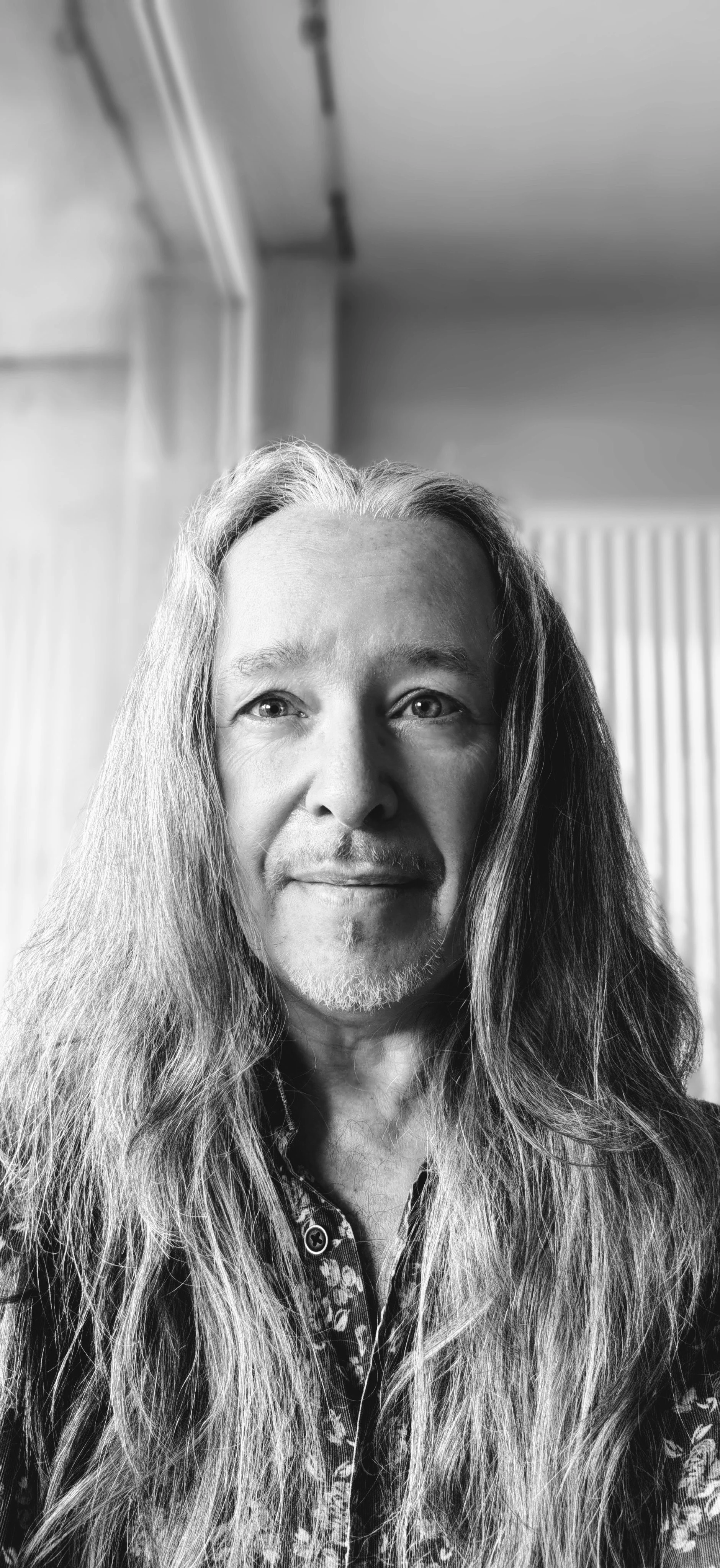
About
Artist. Designer. Sorcerer. Alchemist. Occasionally All Four Before Lunch.
Some people have a job title. Walter has a job constellation. Ask him what he does and you'll get an answer that starts with "well, it depends which layer of reality we're discussing" and somehow still ends with a deadline being hit on time. He builds things that are beautiful first and only reveal, later, on the second or third look, that they were quietly rigorous the entire time — logos with load-bearing geometry, paintings with actual astrology baked into the underdrawing, pieces that were technically commissioned as branding and spiritually commissioned as talismans.
He works at the intersection of design discipline and esoteric depth, pulling from an unreasonably wide array of influences — sacred geometry, alchemy, gemology, mythology, music history, and whatever strange, specific rabbit hole he fell down that particular week — and somehow gets it all to sit calmly on the same page. One guest at a past exhibition summed it up better than any artist statement ever could: "You pull form out of light." Walter didn't write that line. He just happened to witness it standing in the shadows that initiate the light .
How It Started: Ink, Linen, and a Small Inferno.
The craft side of the story begins the traditional way — lightfast inks, acrylic paint, and proper Fabriano paper pressed from linen, the kind of materials that reward patience and punish shortcuts. That foundation in hand-built technique never really left; it just quietly migrated. Over time, the brush work evolved into 3D animation, the flat page became a navigable space, and Walter found himself doing two separate stints as an art director — learning, in both, the difference between an idea that looks good in a sketchbook and one that survives contact with a client, a deadline, and a committee. Eventually he stepped out on his own, into independent work: bespoke pieces, commissioned identities, and projects strange enough that "commission" barely covers it — the kind of work where a client shows up wanting a logo and leaves with a small personal cosmology.
Early along the way there was also, less glamorously, a fire — the kind you don't walk away from with just a good story, though he did manage that too. He survived it as a student, and if you're looking for the moment the mystic and the maker properly introduced themselves to each other, that's probably it. Certain things get very clear, very fast, when the building is on fire.
The Other Curriculum
Here's where the "sorcerer" part of the job title starts pulling its weight. Walter teaches — meditation, visualization technique, and what he calls modi operandi, which is a fancier way of saying "the actual mechanics of how to do the inner work, not just the theory of it." His curriculum covers energetic protection techniques, the Tree of Life, dragons (yes, properly, as living consciousness forms, not decoration), crystals, healing and reading — and unlike a great many people teaching this material, Walter has actually taught people to see energy. Not metaphorically. Not "imagine you can." Genuinely see it. It tends to change the conversation.
The origin of all this traces back further than most people's spiritual timelines go: an awakening at seven years old, one of those Matrix-style freeze-frame moments where the whole scene seems to pause and something behind your eyes remembers exactly what it came here to do. Most seven-year-olds are negotiating bedtime. Walter was apparently negotiating a mission briefing. He's been quietly following up on it ever since.
For the chart-readers in the audience: Leo ascendant, Scorpio placements doing their thing underneath, and born in the Year of the Fire Horse — the same fire sign currently galloping through the calendar again. Draw your own conclusions, either in fireletters or in China ink.
The Soundtrack and the Spice Mélange
No mystic operates on incense alone. Walter's actual fuel is a specific and non-negotiable combination: proper blues — the kind with dirt under its fingernails, minimalist Chicago vocals, a guitar that sounds like it's been through something — sliding into heavier territory whenever a guitar god shows up to remind everyone what the instrument is actually for. Somewhere between a blues shuffle and a metal solo is where most of his best ideas quietly assemble themselves.
Great Indian street food is practically a design consultant at this point — something about chaos, spice, and layered complexity apparently maps directly onto good composition. Good coffee is the other non-negotiable, ideally strong enough to argue with. And crystals are not props on a shelf; they're working materials, studied and handled with the same seriousness most people reserve for their toolkit, because — as far as Walter's concerned — they basically are one.
The Sense of Humor :
or: All rights reserved, all wrongs reversed.
Ask Walter to explain any of the above with a straight face for more than four minutes and he will not manage it. He'll tell you, quite seriously, that "the seventh sense is even more important than the sixth sense — your sense of humour will determine your access to the sixth." Which is, on inspection, not a joke at all. It's a filtering system disguised as one. Take yourself too seriously and the sixth sense stays firmly closed.
He'll also tell you he's "much too laid-back to be a stand-up comedian" — which is the perfect one-liner, true, and also the setup, delivery, and punchline of most conversations with him . The humor isn't a break from the mysticism. It's the same muscle, just flexed sideways.